History
Ter Hooge is one of the oldest country estates on Walcheren: the origins of the castle date back to the 13th century. Ter Hooge was originally a small castle with several outbuildings, surrounded by a moat.
Over the centuries, various families have lived at Ter Hooge, including the influential Zeelandic Van Borssele family.
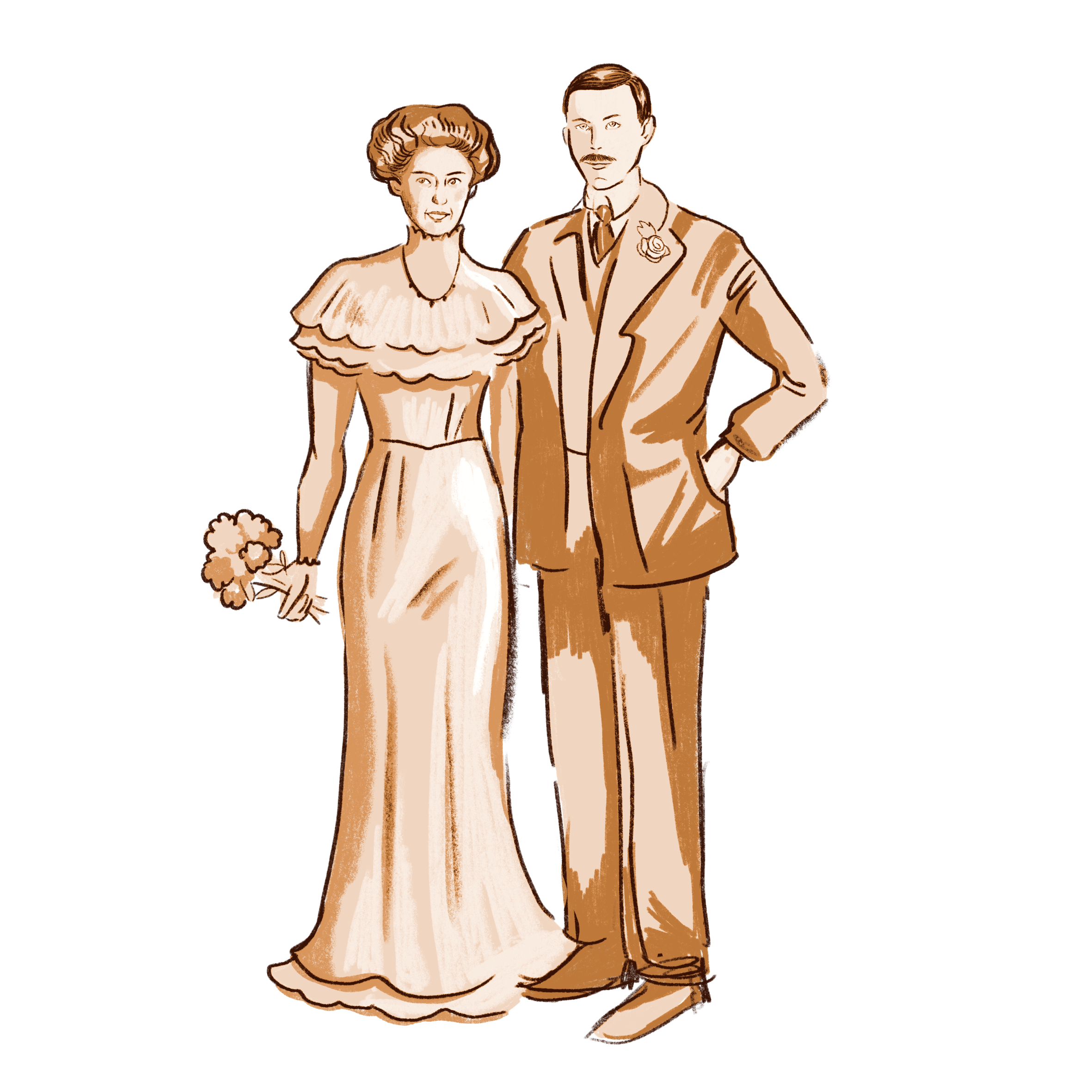
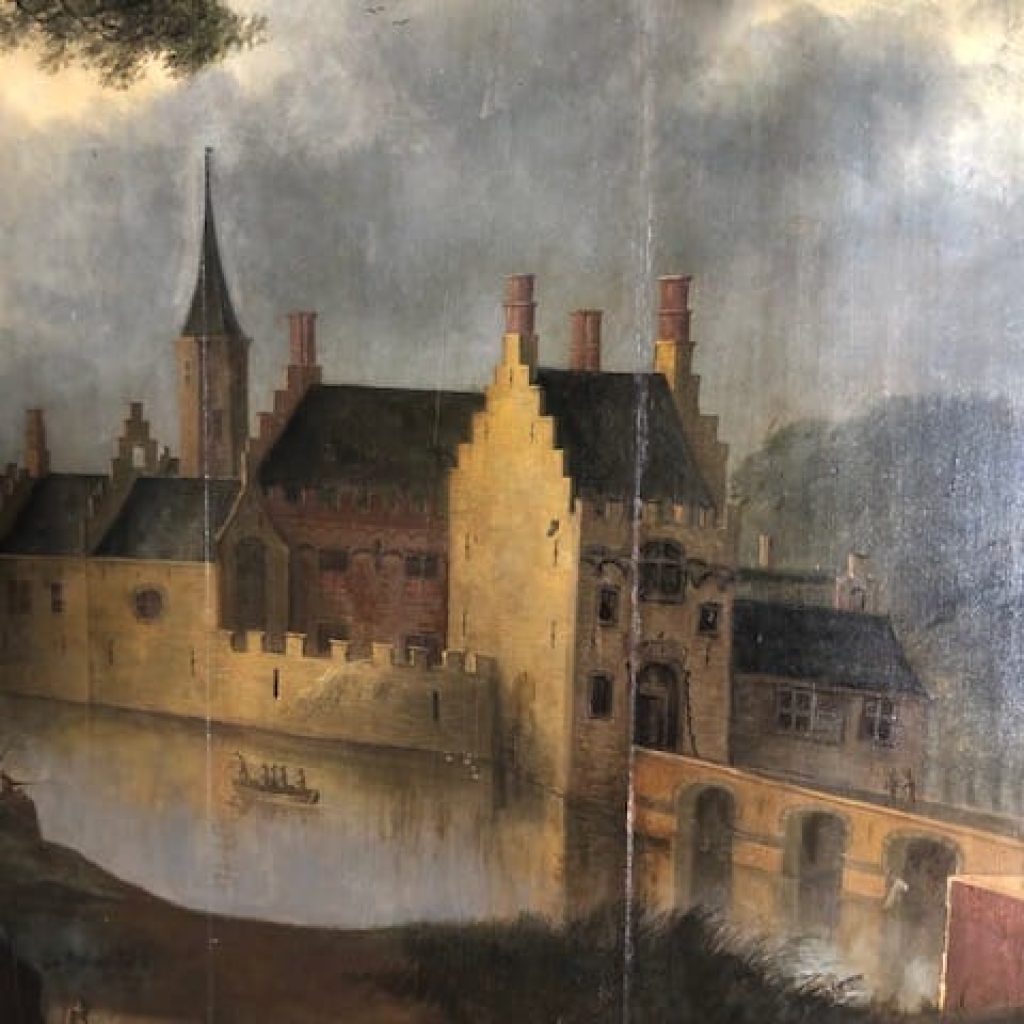
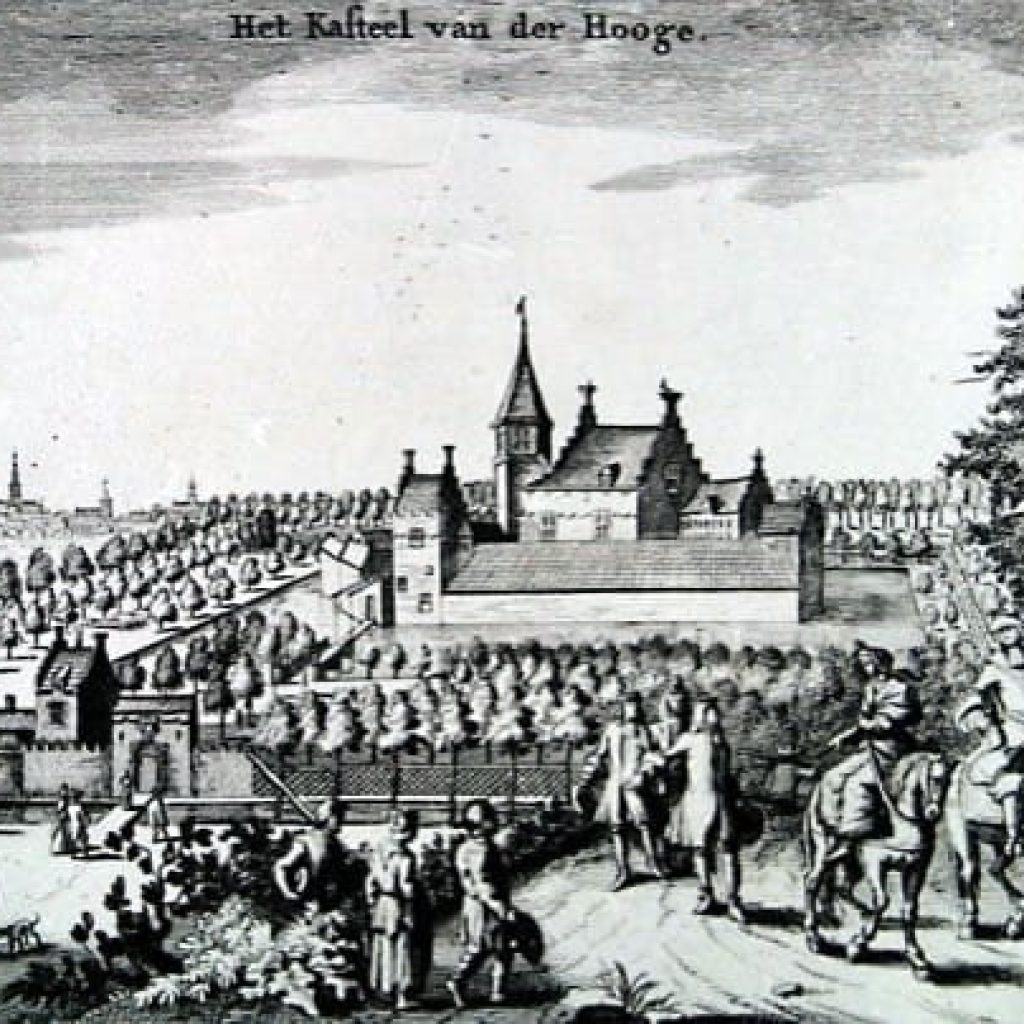
Illustration from the 'Cronyk' by Smallegange, 1696 (ZB, Beeldbank Zeeland).

Early history
In 1754, the house took on its current form. The medieval castle had just been purchased by Jan van Borssele, who had been appointed First Noble of Zeeland by Stadtholder Willem IV and thus held an important position in the States. Van Borssele had most of the medieval castle demolished to make way for a more comfortable and stately residence.
The former great hall and the tower were preserved. The remaining old stonework was used to build an identical tower, giving the house its current symmetrical appearance. The estate was also given a large formal garden in the French style, with straight avenues, star-shaped woodlands, neatly clipped hedges, and a 'grand canal' over which the residents enjoyed views of the dunes.

Early history
In 1754, the house took on its current form. The medieval castle had just been purchased by Jan van Borssele, who had been appointed First Noble of Zeeland by Stadtholder Willem IV and thus held an important position in the States. Van Borssele had most of the medieval castle demolished to make way for a more comfortable and stately residence.
The former great hall and the tower were preserved. The remaining old stonework was used to build an identical tower, giving the house its current symmetrical appearance. The estate was also given a large formal garden in the French style, with straight avenues, star-shaped woodlands, neatly clipped hedges, and a 'grand canal' over which the residents enjoyed views of the dunes.

19th century
In the nineteenth century, ideas about landscape design began to change. The French garden was completely transformed into a romantic parkland. The moat and the grand canal were reshaped into meandering ponds. Winding paths were designed to offer visitors a varied experience of the park, the house, and the surrounding countryside. Exotic trees and a variety of gazebos and small pavilions added an extra dimension to the estate.

19th century
In the nineteenth century, ideas about landscape design began to change. The French garden was completely transformed into a romantic parkland. The moat and the grand canal were reshaped into meandering ponds. Winding paths were designed to offer visitors a varied experience of the park, the house, and the surrounding countryside. Exotic trees and a variety of gazebos and small pavilions added an extra dimension to the estate.
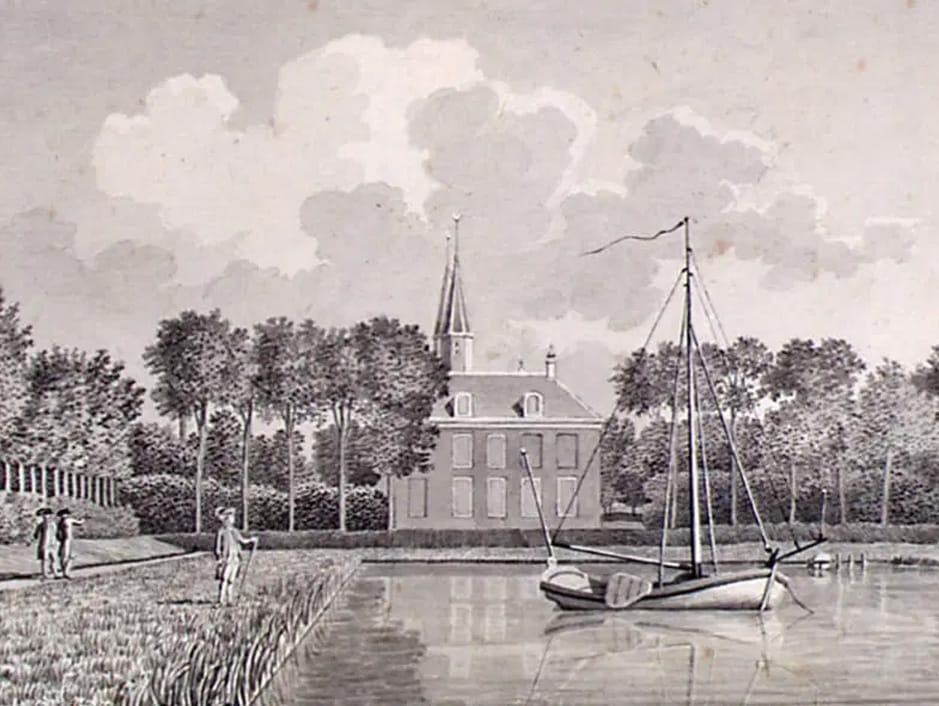
A pleasure yacht moored on the pond at Ter Hooge. Drawing by Jan Arends, 1785 (Zeeuws Archief, KZGW, Zelandia Illustrata).
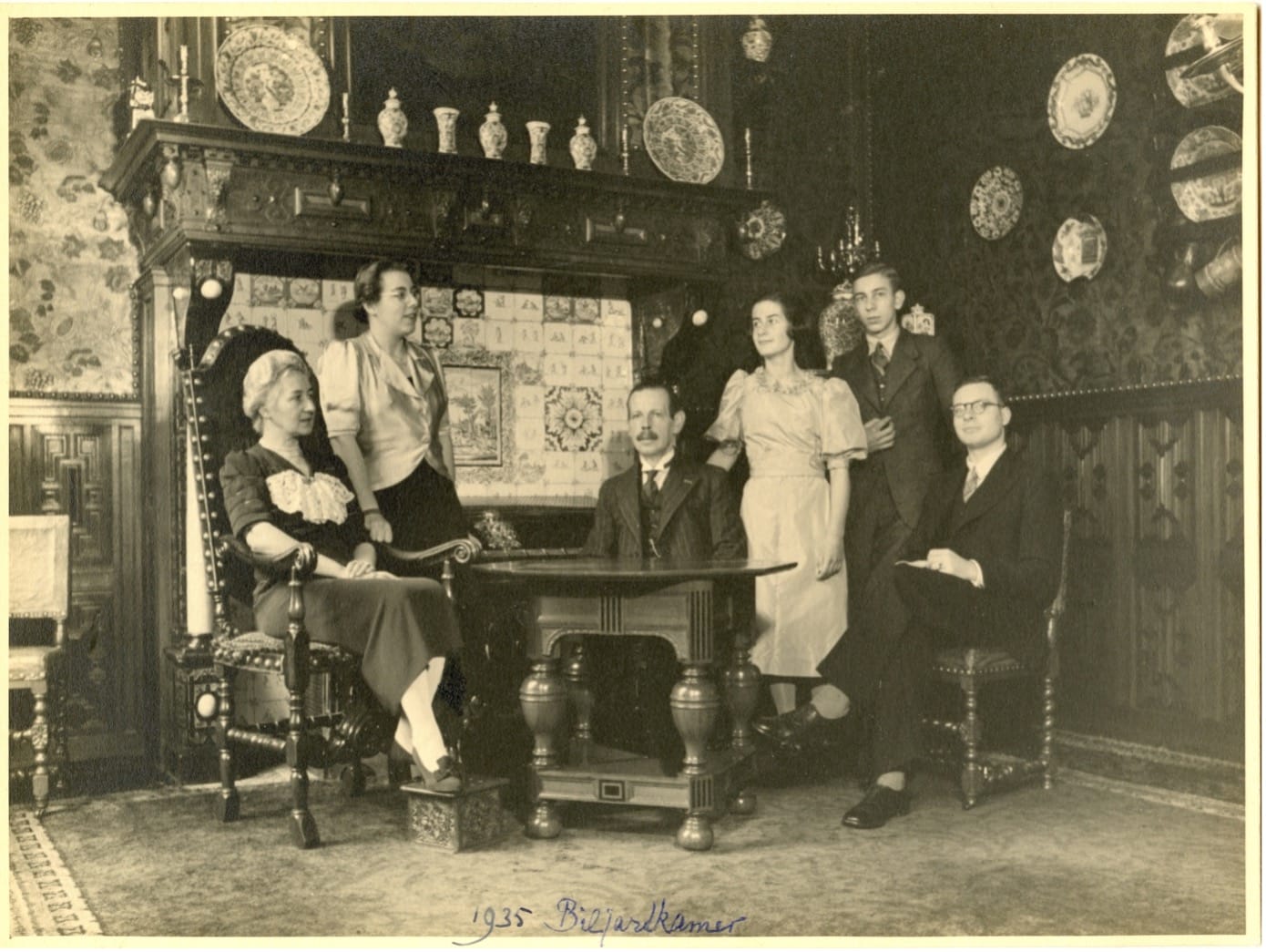
Rudolf Willem Count van Lynden with his family in 1935.

Van Lynden
Ter Hooge passed into the hands of the Van Lynden family in 1871, when it was purchased by Willem Arnold Baron van Lynden and his wife Wilhelmina Johanna van Lynden – de Bruyn. Mr. Rudolf Willem Count van Lynden inherited Ter Hooge in 1926 from his uncle and aunt, who had remained childless. He served as chairman of the Directie der Polder Walcheren and as secretary of PZEM. He was also a co-founder of Stichting Het Zeeuwse Landschap. Together with landscape architect Leonard Springer, he restored the neglected parkland and had various features added, including a rock garden and several garden pavilions. He lived at Ter Hooge with his family of five children when the estate was requisitioned by the Germans in 1942.
To take a deep dive into the life story of Marietje Countess van Lynden – Calkoen and her maid Mina Marinusse, listen here to the podcast made by Maartje Duin, great-granddaughter of Marietje.

Van Lynden
Ter Hooge passed into the hands of the Van Lynden family in 1871, when it was purchased by Willem Arnold Baron van Lynden and his wife Wilhelmina Johanna van Lynden – de Bruyn. Mr. Rudolf Willem Count van Lynden inherited Ter Hooge in 1926 from his uncle and aunt, who had remained childless. He served as chairman of the Directie der Polder Walcheren and as secretary of PZEM. He was also a co-founder of Stichting Het Zeeuwse Landschap. Together with landscape architect Leonard Springer, he restored the neglected parkland and had various features added, including a rock garden and several garden pavilions. He lived at Ter Hooge with his family of five children when the estate was requisitioned by the Germans in 1942.

Second World War
The Second World War had a profound impact on Ter Hooge. The house was used by the Germans as their Zeeland headquarters, and later the Allied inundation of Walcheren almost completely destroyed the parkland. Only one tree survived the salt water beneath the ground: the large chestnut tree at the back of the house. After the war, Van Lynden was determined to restore the parkland of Ter Hooge. Together with the Heidemij, a plan was drawn up to replant a simplified version of the original park.

Second World War
The Second World War had a profound impact on Ter Hooge. The house was used by the Germans as their Zeeland headquarters, and later the Allied inundation of Walcheren almost completely destroyed the parkland. Only one tree survived the salt water beneath the ground: the large chestnut tree at the back of the house. After the war, Van Lynden was determined to restore the parkland of Ter Hooge. Together with the Heidemij, a plan was drawn up to replant a simplified version of the original park.

After the war
Rudolf Willem van Lynden and his family did not return to Ter Hooge. In 1955, he placed the estate in the family foundation Lynden Ter Hooge. He did so for two reasons: first, to preserve Ter Hooge as a whole, and second, to maintain the bond with the descendants of the founder. In 1978, the family largely opened the park to walkers. After a period as a care home and hotel in the 1980s, the house was divided into four apartments. The castle (in part), the orangery and the gardener's cottages are still inhabited by the family.

After the war
Rudolf Willem van Lynden and his family did not return to Ter Hooge. In 1955, he placed the estate in the family foundation Lynden Ter Hooge. He did so for two reasons: first, to preserve Ter Hooge as a whole, and second, to maintain the bond with the descendants of the founder. In 1978, the family largely opened the park to walkers. After a period as a care home and hotel in the 1980s, the house was divided into four apartments. The castle (in part), the orangery and the gardener's cottages are still inhabited by the family.
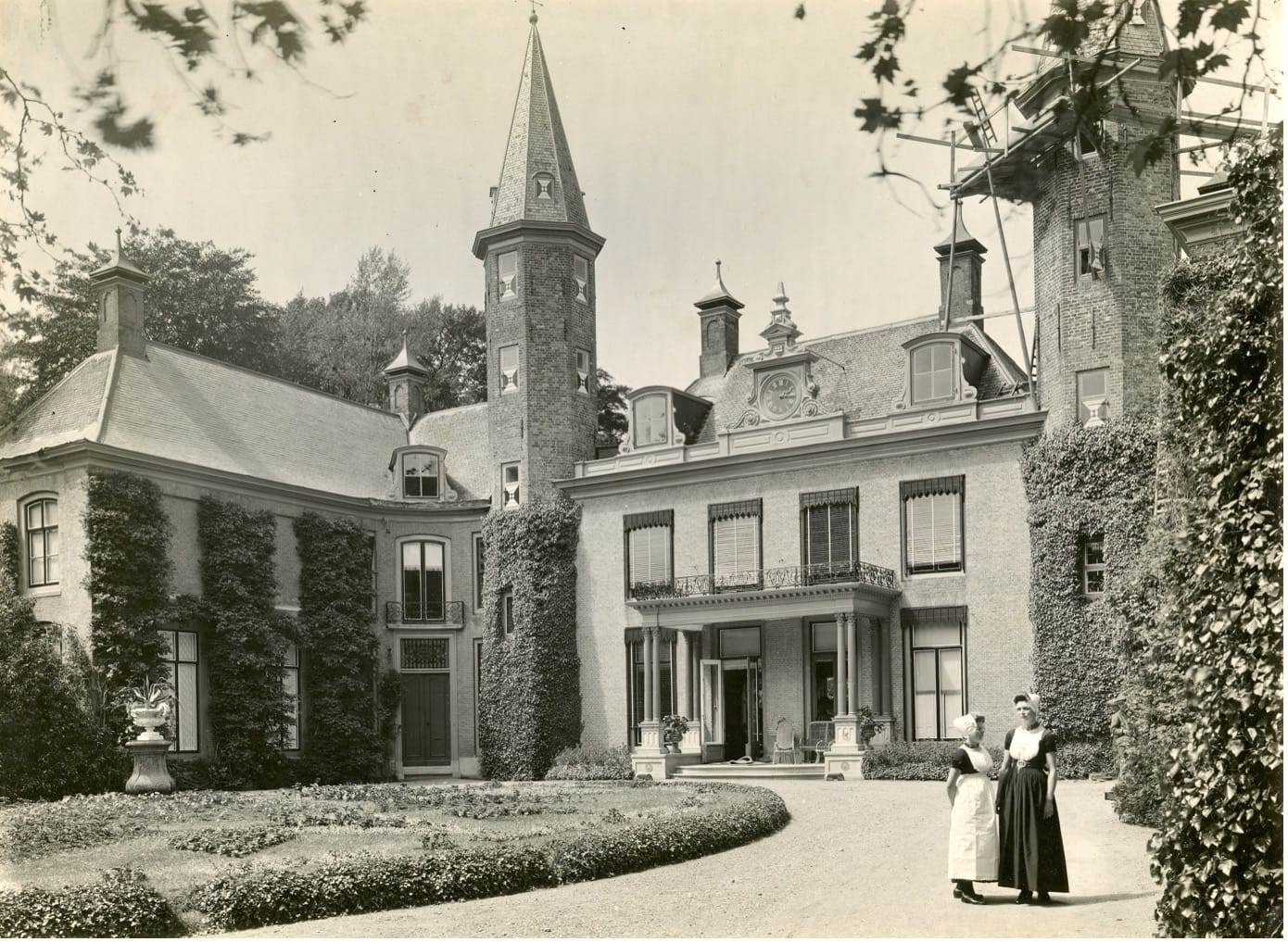
Ter Hooge 1926
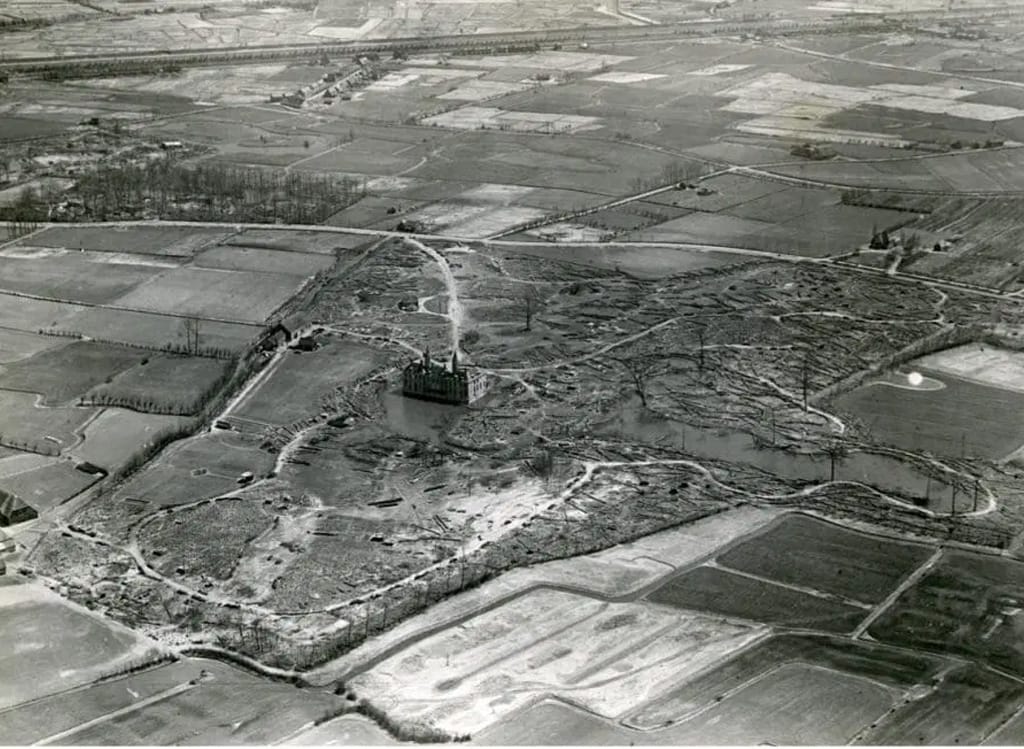
Landgoed Ter Hooge after the inundation

De Tuin van Zeeland
Around 1995, the idea arose to revive the atmosphere of Walcheren's pre-war coulisse landscape and, in doing so, to strengthen the relationship between Ter Hooge and the surrounding countryside. This initiative came about through a three-way collaboration between Stichting Lynden Ter Hooge, Stichting Het Zeeuwse Landschap and the Dreessen family of care farm Pitteperk. In 2003, de Tuin van Zeeland – named after Walcheren's old nickname – was officially opened. Characteristic features include Zeeland mixed hedgerows, drinking ponds, specimen trees in the meadows and avenue trees.
Since 2013, the foundation has taken charge of woodland management again, with support from forest manager de Bosgroep and Head Forester Vahan Karaganjan. Work is regularly carried out with groups of volunteers from Stichting Landschapsbeheer Zeeland. The national and provincial governments contribute through management subsidies.
In 2018, a substantial thinning of the tree stock took place. In 2022/23, more than 3,000 trees and shrubs were planted to introduce greater variety. In 2024, over 100 pike were released into the ponds to keep the carp population in check. At two locations, attractive natural banks were created.

De Tuin van Zeeland
Around 1995, the idea arose to revive the atmosphere of Walcheren's pre-war coulisse landscape and, in doing so, to strengthen the relationship between Ter Hooge and the surrounding countryside. This initiative came about through a three-way collaboration between Stichting Lynden Ter Hooge, Stichting Het Zeeuwse Landschap and the Dreessen family of care farm Pitteperk. In 2003, de Tuin van Zeeland – named after Walcheren's old nickname – was officially opened. Characteristic features include Zeeland mixed hedgerows, drinking ponds, specimen trees in the meadows and avenue trees.
Since 2013, the foundation has taken charge of woodland management again, with support from forest manager de Bosgroep and Head Forester Vahan Karaganjan. Work is regularly carried out with groups of volunteers from Stichting Landschapsbeheer Zeeland. The national and provincial governments contribute through management subsidies.
In 2018, a substantial thinning of the tree stock took place. In 2022/23, more than 3,000 trees and shrubs were planted to introduce greater variety. In 2024, over 100 pike were released into the ponds to keep the carp population in check. At two locations, attractive natural banks were created.
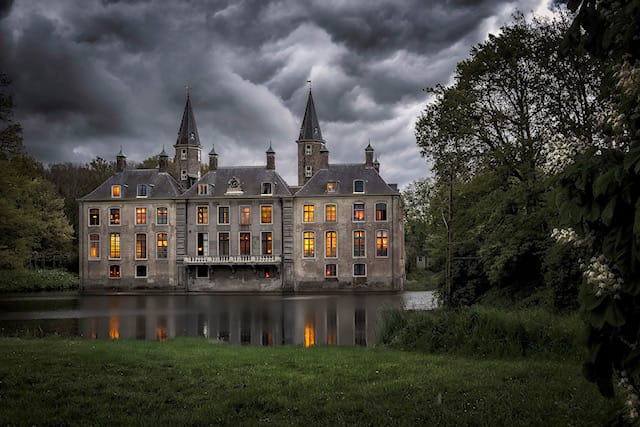
Photo: Adri Padmos
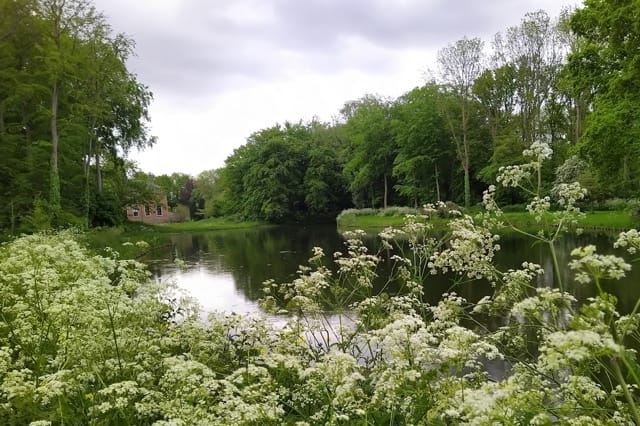
Photo: Janet Weststrate